

Leif Van Grinsven: From Milwaukee to Transforming Rural Africa
W. Leif Van Grinsven was born and raised in Milwaukee, near Chicago, USA, in a community that valued education, curiosity, and social engagement. From an early age, he was drawn to understanding societal structures and how they shape human opportunity. He pursued higher education rigorously, culminating in a master’s degree in Development Studies, which gave him a strong foundation in economic development, social policy, and sustainable growth strategies.
Early in his professional journey, Leif gravitated toward humanitarian work. During the COVID-19 pandemic, he interned with the World Health Organization, contributing to emergency management and crisis response efforts. This work exposed him to the interconnectedness of public health, infrastructure, and social vulnerability, reinforcing the idea that short-term emergency interventions must be complemented by long-term systemic solutions. He observed firsthand how disasters—whether health crises or environmental shocks—often exacerbate existing inequalities and disproportionately affect marginalized populations.
A pivotal moment came during his fieldwork in India, where he worked with women affected by sex trafficking. Witnessing the gap between well-intentioned programs and real-world outcomes led Leif to a profound realization: intentions alone are insufficient; solutions must be contextual, participatory, and sustainable. This experience crystallized his commitment to holistic approaches, emphasizing empowerment, structural change, and systemic thinking.
Leif then moved to Rwanda, joining an e-commerce startup aimed at connecting African farmers directly with global buyers. By removing intermediaries, the platform enabled farmers to earn higher incomes and gain market stability. Beyond financial benefits, the work taught Leif to approach development challenges through a systems lens—understanding that income, housing, infrastructure, agriculture, education, and environmental health are deeply interdependent. He learned that enhancing one aspect of community life without considering others could limit long-term sustainability.
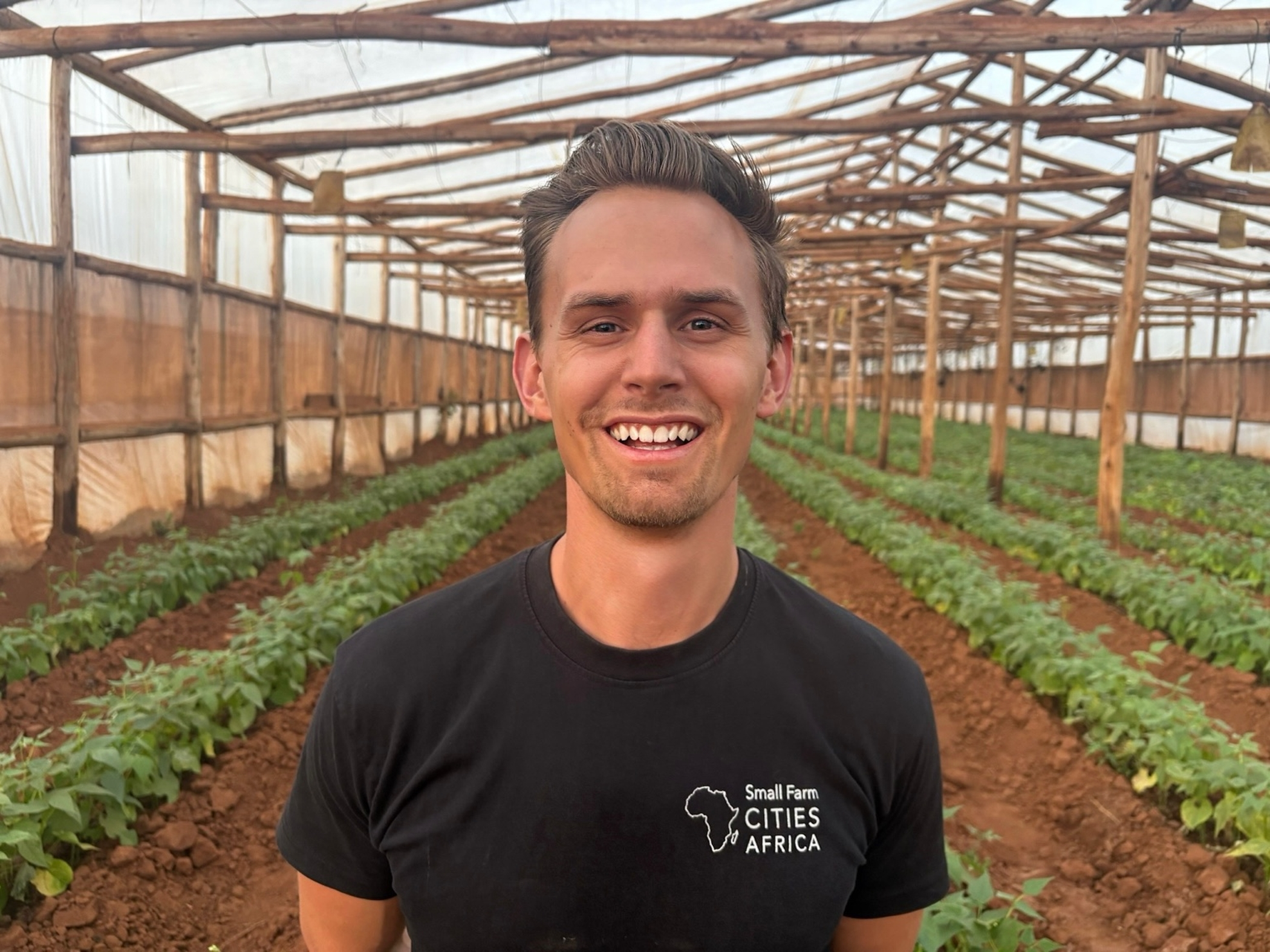
Four years ago, Leif co-founded Small Farm Cities Africa in Malawi, a social enterprise that embodies his systems-thinking philosophy. The organization aims to eradicate rural poverty by integrating housing, agriculture, environmental stewardship, and community infrastructure into a single, replicable model. The core components of the initiative include:
-
Affordable, Eco-Friendly Housing:
Homes are constructed using interlocking soil bricks, an environmentally sustainable method that reduces costs while maintaining durability. Families purchase homes through manageable instalments, ensuring ownership, dignity, and financial accessibility. -
Income-Generating Agricultural Plots:
Each household receives access to agricultural land, complete with seeds, fertilizers, technical guidance, and market connections. This ensures residents can generate income while also contributing to local food security. -
Environmental Sustainability:
Leif’s team incorporates agroforestry, tree planting, and soil restoration practices into community planning. These interventions combat deforestation, improve soil fertility, and enhance long-term ecological resilience, creating a symbiotic relationship between human settlement and environmental health. -
Infrastructure and Connectivity:
Communities are designed with running water, solar electricity, and Wi-Fi access, fostering both quality of life and economic opportunity. This infrastructure enables residents to engage in commerce, education, and digital connectivity, bridging the rural-urban gap.
A unique feature of Small Farm Cities Africa is women’s empowerment. Women are given co-ownership of homes, manage agricultural plots, and engage in secondary income opportunities, such as reselling crops. This model creates financial independence, leadership, and social influence for women within their communities. Youth are also central to the organization, with most staff under 35. Leif emphasizes that engaging young leaders drives innovation, accountability, and long-term sustainability, as they bring energy, creativity, and a willingness to experiment with solutions that older structures might resist.
The enterprise’s growth and impact are measurable: three fully operational communities, over 125 employees, and weekly sales of 5–10 metric tons of tomatoes, reflecting both financial viability and community benefit. The approach demonstrates that social entrepreneurship can balance profit and purpose, showing investors, partners, and policymakers that sustainability and scalability are achievable in rural development.
Leif’s future ambitions are bold: expanding to a 100-home community in Malawi and piloting projects in Kenya, with plans to raise $750,000–$1,000,000 to amplify impact. His vision includes replicating the model across multiple countries, adapting it to local contexts while maintaining the systems-based methodology.
Leif discovered the YECO Programme (Youth Ecopreneur Programme) at an environmental conference and immediately recognized its value. He views it as a platform that fosters authentic connections, collaborative problem-solving, and access to global investors. For Leif, success on such platforms requires active engagement, relationship-building, and maximizing the resources available, reinforcing his philosophy that opportunity alone is not enough; intentional action is critical.
W. Leif Van Grinsven’s journey reflects visionary social entrepreneurship in action. From Milwaukee to India, Rwanda, and Malawi, he has woven together holistic development, sustainable agriculture, youth empowerment, and environmental stewardship into a model that produces tangible outcomes. His work demonstrates that complex global challenges can be addressed through integrative, scalable solutions, empowering local communities while creating measurable social, economic, and environmental impact.
Interview conducted and written by Hassan Alam (UN Volunteer, 2025)